Best places to see fall foliage
Compare destinations from the high Rockies to the Ozarks, ordered by typical peak date.
Through Andy’s lens
Meet the photographerPlaces worth a closer look, photographed by Andy Feliciotti.
-
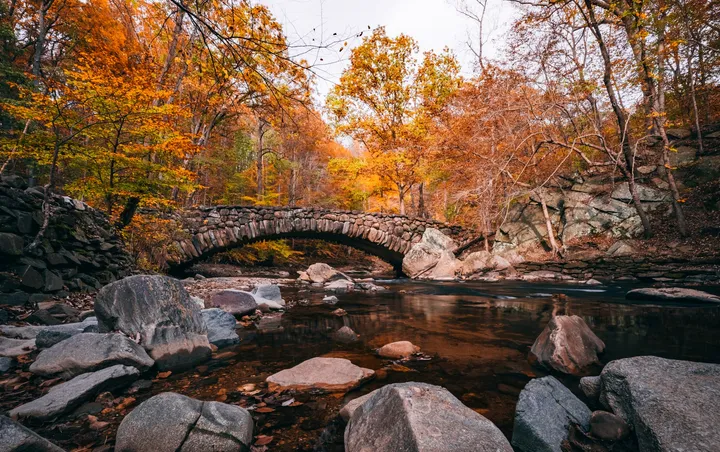
Boulder Bridge, Washington, D.C. · Archive photograph · © Andy Feliciotti Boulder Bridge, Rock Creek Park
- Typical peak
- Oct 18 – Oct 26
- Plan for
- Overcast light
-
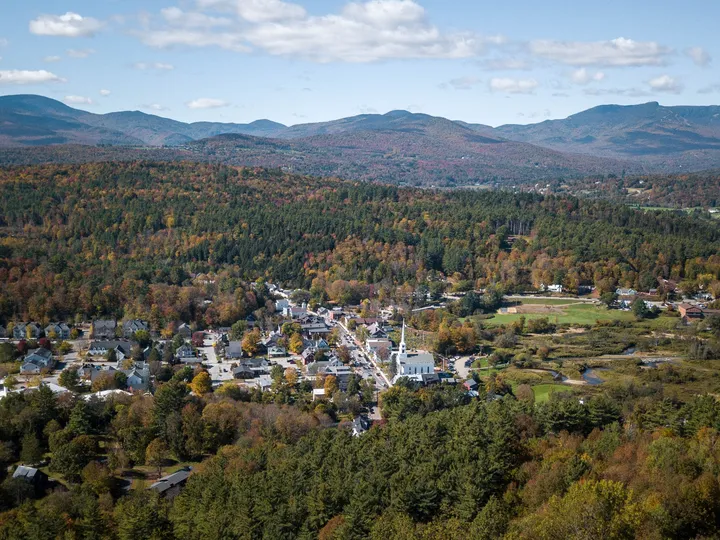
Stowe, Vermont · Archive photograph · © Andy Feliciotti Stowe Community Church
- Typical peak
- Oct 2 – Oct 10
- Plan for
- Sunrise or sunset
-
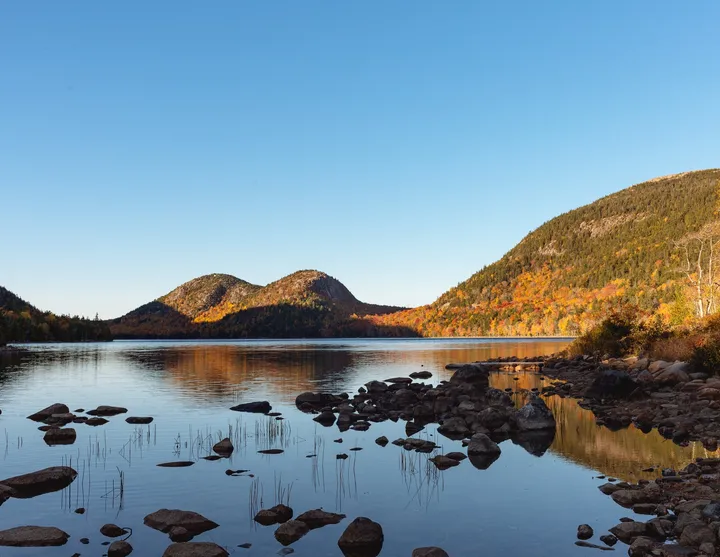
Jordan Pond, Acadia National Park, Maine · Archive photograph · © Andy Feliciotti Jordan Pond South Shore
- Typical peak
- Oct 4 – Oct 12
- Plan for
- Sunrise
Typical seasonal windows. Source: seasonal timing model; local weather can shift peak.
Seasonal model estimate. Timing remains uncertain; check recent reports before traveling. Source: seasonal timing model. Calculated .
-
1. Montana
Peak Sep 11 – Sep 19Western larch is a deciduous conifer that turns gold weeks after everything else has dropped, giving Montana a second season.
Aspen peaks late September; larch is a late-October into early-November event.
-
2. Wyoming
Peak Sep 12 – Sep 20The Tetons rise straight out of aspen and cottonwood flats, which is why Oxbow Bend is photographed more than almost anywhere in the West.
The Tetons and high country peak in the last week of September; the basins in early October.
-
3. Colorado
Peak Sep 16 – Sep 24The largest aspen stands on the continent, turning a saturated gold against 14,000-foot peaks and, often, fresh snow.
Above 10,000 ft peaks in mid-September; the 8,000-ft valleys follow in early October.
-
4. Utah
Approaching peak Sep 19 – Sep 27Bigtooth maple gives Utah a true crimson that the rest of the Rockies simply does not have.
The high Wasatch peaks late September; the canyons and Zion in mid-to-late October.
-
5. Minnesota
Approaching peak Sep 22 – Sep 30The North Shore turns earlier than almost anywhere in the lower 48, and tamarack extends the season into November.
The Arrowhead peaks in the last week of September; the Twin Cities and south in mid-October.
-
6. California
Approaching peak Sep 23 – Oct 1The Eastern Sierra aspen canyons run gold against granite, and the season stretches from September highs to November in Yosemite Valley.
Bishop Creek and the high Eastern Sierra peak late September; Yosemite Valley in late October into November.
-
7. Michigan
First color Sep 26 – Oct 4The Upper Peninsula is the most underrated foliage region in the country, with Lake Superior for foreground and almost no crowds.
The western UP peaks around the start of October; the Detroit area lags by nearly a month.
-
8. Wisconsin
First color Sep 26 – Oct 4The Northwoods lake country gives you maple reflected in still water, which is the whole reason to be there at dawn.
Northern counties peak in the first week of October; Door County and the south run mid-to-late October.
-
9. New Hampshire
First color Sep 29 – Oct 7The White Mountains stack four weeks of color into a 6,000-foot elevation range, so something is always at peak somewhere.
Notches and high passes peak in late September; the Lakes Region and seacoast hold on into mid-October.
-
10. Maine
First color Sep 30 – Oct 8Color sweeps from the North Woods to the coast over nearly a month, and Acadia lets you shoot it against the Atlantic.
Aroostook and the North Woods peak late September; Acadia and the midcoast run mid-to-late October.
-
11. New York
First color Sep 30 – Oct 8The Adirondacks are the largest protected forest in the lower 48, and the Catskills and Finger Lakes extend the season by weeks.
The Adirondacks peak in the last days of September; the Hudson Valley and Long Island run into late October.
-
12. Vermont
First color Oct 1 – Oct 9The densest sugar maple concentration in the country, which is why Vermont reds are the benchmark everything else is measured against.
The Northeast Kingdom turns roughly a week before the southern valleys; ridgelines lead the valley floors by 10–14 days.
-
13. Massachusetts
No change Oct 7 – Oct 15The Berkshires deliver classic New England color without New England crowds, and the Mohawk Trail is one of the great foliage drives.
The Berkshires lead Boston and the Cape by about two weeks.
-
14. Pennsylvania
No change Oct 7 – Oct 15The Pennsylvania Wilds offer forest drives and overlooks away from the busiest fall destinations.
The northern tier peaks in early October; the southeast corner waits until the end of the month.
-
15. West Virginia
No change Oct 8 – Oct 16The most mountainous state east of the Rockies, and Dolly Sods gives you a high plateau that turns early and hard.
The Allegheny highlands peak in early October, a full three weeks before the Ohio River valley.
-
16. Virginia
No change Oct 9 – Oct 17Skyline Drive runs 105 miles along a ridge with overlooks on both sides, which is as efficient as foliage shooting gets.
Skyline Drive ridgetops peak mid-October; the Piedmont and Tidewater follow two to three weeks later.
-
17. North Carolina
No change Oct 13 – Oct 21The highest peaks in the eastern US, so a single Blue Ridge Parkway drive can cross a month of phenology in an hour.
Above 5,000 ft peaks in early October; Asheville mid-to-late October; the foothills into early November.
-
18. Tennessee
No change Oct 15 – Oct 23The Smokies hold more tree species than all of northern Europe, which is why the color there is mottled rather than uniform.
Newfound Gap and the high ridges peak in mid-October; Cades Cove and the valleys wait until the very end of the month.
-
19. Arkansas
No change Oct 20 – Oct 28The Ozarks and Ouachitas give the South a proper late-season peak, and the Buffalo River bluffs are the signature shot.
The Ozark highlands peak in late October; the Delta lowlands in early-to-mid November.
Planning around peak
Follow the elevation
Try higher ground when valleys are green, or lower valleys after ridges have passed peak.
Go midweek
Consider a weekday for popular drives such as the Blue Ridge Parkway and Route 100.
Wind ends peak early
Strong gusts can bring leaves down quickly; check the wind forecast before traveling.